Web Analytics
12Jul

How to Promote Travel Tourism Website and Enquiries ?

Importance of SEO for Travel Industry

Allow the figures to do the talking. A recent study conducted by  Travel Commission concluded that as many as 72% of the trips were booked through internet. This is not it. There is a rise in the internet bookings by 45% since 2009. Hence, it is clear that more and more customers are relying upon online channels to fulfill their travel requirements and this trend is sure to get more popular, all thanks to the widespread use of smartphones and internet using devices.

SEO allows you to target customers for a range of keywords. Unlike other strategies (PPC, Facebook admangers), targeting keywords in SEO is fairly easy and pocket friendly. SEO lets you target a large number of keywords along with their variations, for no extra costs. For example, if you are in the business of booking hotels, you might like to target keywords like ‘hotel reservation’ and ‘hotel booking’. But why restrict yourself? You could also try your hands on other related keywords like ‘kerala hotels’, ‘best hotels in kerala’ and so on. SEO doesn’t restrict your keywords with a budget. SEO gives you the liberty to explore more and target a range of related keywords for no extra costs.

travel

Positive Online Customer Reviews
Positive online customer reviews instill the confidence in your brand. Positive reviews speak of your good will in the market. Manage your reputation online by earning some good customer reviews. You could do this by asking your customers to leave positive reviews on popular travel forums. TripAdvisor is one of them. Make sure that the reviews are honest and left from genuine people. Further, also keep a close eye over the negative reviews and take all possible measures to address them.

30Jun

Best keywords to promote your SEO strategy for websites

Keywords are essential to every aspect of your SEO campaign, from on-site optimization and usage to link prospecting and acquisition. Knowing which terms to target and how to target keyword to produce great result.

  1. Think from client side view and chose keywords

keywords are terms and phrases your target audience uses when talking about your business or industry. These phrases are usually very broad and generic, so they are often much harder to rank for than others; nonetheless, they are still extremely important.

keywords-seoThese terms are critical in your on-page optimization. Following SEO best practices, add these terms throughout your site pages. keywords are also helpful in jump-starting your content creation. Framing these keywords inside broader questions can help you develop some great content for your site or blog.


When it comes to link acquisition, use these terms to prospect for link- or community-building opportunities. I know manual link building is not the most glamorous thing these days, but it works better than any other method. These terms may uncover some other great sites within your field that you can partner with.

keywords

Customer-defining keywords are the terms and phrases your customers use to define themselves. What do your customers call themselves?  How do they refer to others in their group?  These two questions will guide you to uncovering these powerful keywords.

This type of keyword is important because it will help you discover others who relate to your target audience. Some may be directly related to your customer base, and others may be in a similar niche. Either way, by using these terms, you can uncover some great insight into how your audience speaks and how you can frame your site in a way that entices them to interact.

SEO is much more than just search; it’s about creating a connection. Customer-defining keywords will help connect you with those who want or need your product or service. By understanding how your audience defines themselves, you can create better content, build more contextually appropriate links and build better, more authentic connections online.

Use Google Keyword Planner , Use google trends for what people are mostly used for find the result

Use Long tail keywords those three and four keyword phrases which are very specific to whatever you are selling. You see, whenever a customer uses a highly specific search phrase, they tend to be looking for exactly what they are actually going to buy.

More details : www.tgitechnologies.com

08Jun

Is Blogging Important for your Business? Why?

Blog sign isolated on white

Some debate are going regarding this topic out of that  blogging is still relevant in today’s social media marketing domain.

Though you have a small business, or a multinational company, blogging is intrinsic for your online content marketing procedures.

 There are mainly 4 reasons behind blogging:

  • Rush  traffic to your website
  • Shoot up your SEO/ SERP results
  • Spot your brand as an industry leader
  • Enhance better customer relationships
08May

Guide to Create a WordPress Blog Post

create WordPress blog postWordPress is the most popular Content Management System. It is such a good tool to create a blog post and also landing pages. If you are an SEO expert or content writer you may come across with WordPress. Getting familiar with WordPress is a best move. On these days most people go for WordPress as their CMS choice because it is easy to use and maintain and also to customize.
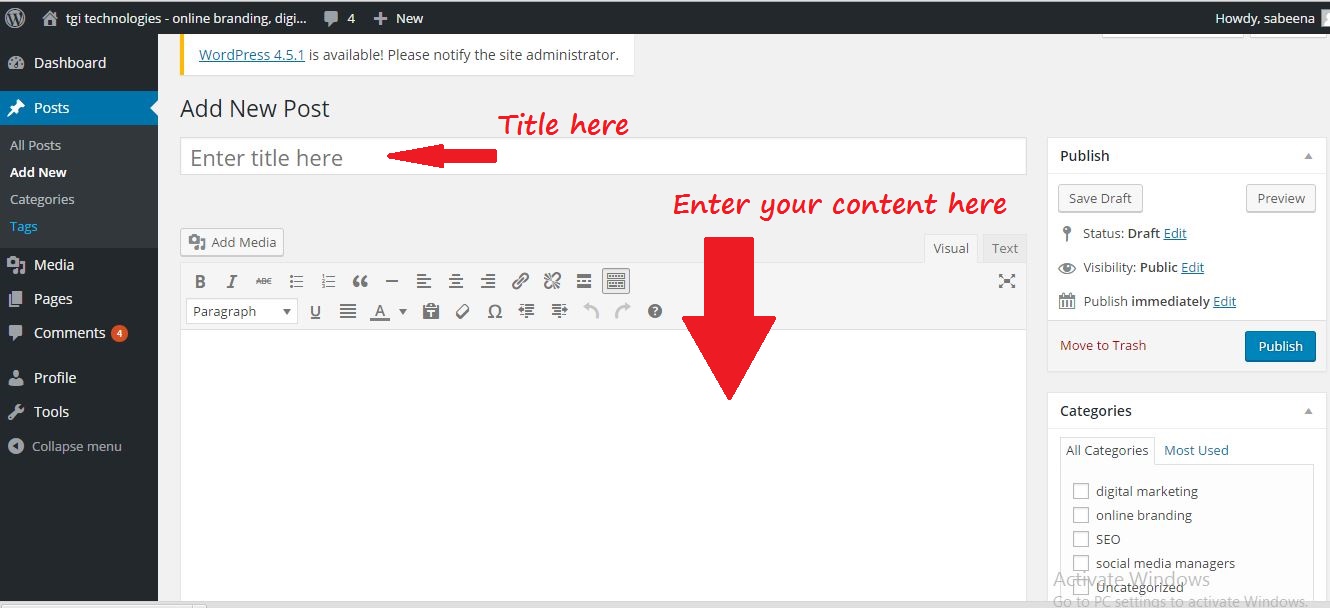
Here we first go with how to upload a WordPress blog post. Before optimizing a blog post, you should upload it and make it live.

Uploading Blog Post

1. After log in to your site you may enter to your dashboard. There you can see the “Post” option click on it and select “Add New”.

2. Now you enter into a page where you can start your blog post. Give a title to your post in “Enter  title here”.

3. Under that section you can start your blog. Content can be directly enter into the blog post and  publish it or make it as a draft if you are not ready to publish it. Some people write all the blog post separately in some programs(like word). Then copy paste the content once they are ready to publish.

enter content in wordpress post

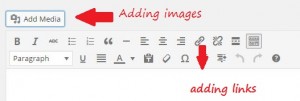
4. You can add links to your post. For this select the text you want to make it hyperlink. Then click on the symbol showing the link. A small window opens and there you can add the url. Then click add link. add links and images

5. Adding images in your post is also simple. If you have images, place your cursor where you want the image. Click on “Add Media” and select “Upload Files.” After choosing your preferred settings, click “insert into post” to add your image in your blog post. Sizing and aligning your image can be done by selecting your image.

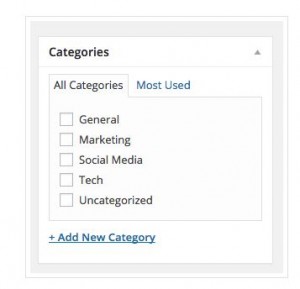
6. There is a “Categories” section on the right side of your screen. No need to categorize your post (unless your site is organized by categories), but you can add one if you wish. If you do so, WordPress will create category pages that pull in posts within that category.

categories in blog post

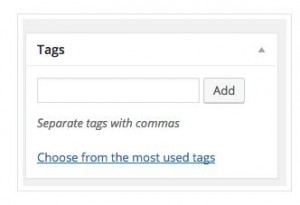
7. Under the “Categories” section, you’ll see the tags section.  You can add tags to your post here.

tags

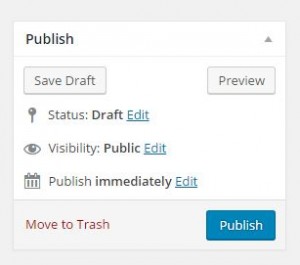
8. On the right side up there is a section called “Publish.” Here you can choose “Preview” to make sure everything looks right in your post before uploading it. If something doesn’t look the way you want,  just edit that section.

create blog post

Basic Optimization Tips

As an SEO you should focus on the blog post optimization. There are so many things you have to consider while go for optimization. Usually WordPress offers Plugins to optimize your post. In SEO perspective the best Plugin is Yoast SEO.

Yoast SEO is one of the popular Plugin available. In Yoast SEO you have the option to add SEO title, Meta description and also option to edit the post URL and so on. You can also share your post through this. I will share the detailed description about Yoast SEO in my next post.

Now we can go through some basic tips on optimization other than plugins.

  1. <h1> is the most important tag in your post. Usually people add more than one <h1> in their post.  In blog posts the title you entered will automatically work as <h1>. So make sure that your post has only one <h1>.
  2. Blog should be not less than 300 words.
  3. Title of your post should include main focusing keyword. Include 50- 60 characters in your post title.
  4. Include Alt tags for your image. This tag describes what the image is about. Try to include keywords on this alt tag.  There are various ways to add alt tags for your image, but it all comes down with whether you are using the visual editor or the text editor. visual or text editorVisual: Click on the image you want to add alt text, and click on the “Edit” icon. Add your alt text in the “Alternative Text” field. Make sure to click on “Update” after.                           Text: Simply add the alt=“” snippet of code inside the image tag. For example :

    <img src="http://www.domain.com/images/1" alt="describe image">

If everything is complete you can publish your post. Sometimes you should find some mistake after publishing the post. If it happends just go to the edit section and clear out the problems and click on “update”.

04May

Simple Ways to Boost Your Website’s SEO results

Search Engine Optimization  is a popular online marketing strategy, and therefore, competitive, but I’m consistently amazed at how many business owners and marketers opt not to engage in an SEO strategy because of its perceived limitations or drawbacks.webmaster-tools-should-using-better-seo

Related: Top 7 Things You Don’t Know About SEO

One of the biggest misperceptions is that SEO is expensive, and it’s driven by the fact that some agencies have higher-level packages that cost tens of thousands of dollars per month.

Yes, SEO can be expensive for hyper-competitive, national-scale businesses, but that doesn’t mean it’s unaffordable for the average business owner.

In fact, there are dozens of simple strategies you can execute yourself, for free, to better optimize your site for search engines. These are just some of the major ones:
1. Find better keywords.

Optimize for keywords that are closer to your niche and have fewer competitors. Google Trends and Google’s Keyword Tool in AdWords are free tools that should give you all the data you need. For help, see this article.

23Apr

Remove Spam Links using Google’s Disavow Tool

Are you familiar with Disavow Tool.  It’s a power tool introduced by Google in October 2013.  You are familiar with certain spammy or low quality links in your site. These unnatural links pointing to the site may cause your site to get into Google’s Penguin Updation. Or, in some cases they can even get  a manual unnatural links penalty. Through Disavow tool you can ask Google not to consider unnatural links, while accessing your site.disvow tool

Google itself give a documentation regarding how to use the tool. In this part they tell us that we should use this tool with more care. This is an advanced feature. If it is used incorrectly, it may even harm our site performance in Google search result.

Before disavowing backlinks from your site you have to go through this

  1. Compare website analytics with Google calendar.
  2. Check backlinks using Google Webmasters Tool and download all links to your site.
  3. Check for Penguin updation affected your site or not.
  4. Create a document containing only the links you want to disavow.
  5. Try to contact the spam site through mail or other source to remove their links.

Penguin updation is a major updation made by Google to avoid link spamming. You may add some links to your site to create backlinks using certain link building schemes. On the other hand certain sites may points to your site without your intention. In both cases if any link is found spam or low quality you should remove it. Otherwise your site will naturally got punishment from Google. By comparing your website analytics with Google calendar you can easily understand you have got any punishment or included in any updation or not.

Using Google Webmasters Tool you can download all links to your site. For this go to Search Traffic >> Links to your site >> More. This will give a file containing all the pages linking to your site. Use this file to create a document containing list of links you want to disavow. Disavow document should be in .txt file and it must be encoded in UTF-8 or 7-bit ASCII. So create it in notepad. Don’t upload entire list of downloaded links. Text file should contain only the links that you want Google to ignore.

Disavow the links in domain level is good. The format should be like this “domain: website.com” You can also add comment to this site using “#” . Entering comment in text file is good when you are editing this file in future.

Here an example of disavow file

disavow file format

Next step is to upload this file into disavow tool. For this go to Disavow links tool page > >Select your website >>Click Disavow links > >Disavow links again and then  >>choose file. This is where you will upload the .txt file that just created.

By disavowing a domain, Google will apply an invisible nofollow  tag to each link that points to your site from this domain. Google will take some time to disavow a link. And also uploading a new file will replace all previously uploaded ones.

For any type of queries or enquiries please free to contact  TGI Technologies