Web Analytics
06Aug

From Keyword Matching to Entity Relationships: Why Knowledge Graphs Have Rendered Classic Backlinks Obsolete

Stop chasing low-tier backlinks; start building verified entity nodes across global databases.

For over two decades, digital marketing relied on a very simple formula. Marketers targeted specific search queries and accumulated as many backlinks as possible. Early search engines operated as sophisticated voting machines. They counted every inbound hyperlink pointing to a webpage as a digital vote of confidence. This primitive era created an entire global industry dedicated exclusively to link building, keyword density analysis, and rank tracking. Today, that traditional model is rapidly collapsing.

Modern search systems no longer read the internet as isolated strings of text. They do not merely count keyword repetitions or tabulate raw backlink profiles. Instead, generative AI and modern search engines understand the world through defined entities. They map complex semantic relationships between people, organisations, places, and core concepts. This fundamental shift means that structured knowledge graphs now dictate digital visibility. If your enterprise only focuses on legacy link building, you remain entirely invisible to the AI models shaping the future of information retrieval.

The Collapse of the Legacy Link Economy

Early search algorithms relied heavily on backlinks because they lacked true semantic understanding. These early algorithms could not actually read or comprehend the context of a webpage. They simply observed that page A linked to page B using specific anchor text. Consequently, acquiring thousands of low-tier links became a highly reliable way to manipulate search engine rankings.

The introduction of Large Language Models (LLMs) and advanced natural language processing changed everything. Modern AI evaluates the underlying meaning and factual accuracy of content rather than simply counting inbound links. When users ask complex, multi-layered questions, systems like Google AI Overviews extract facts directly from structured databases. Suppose a generative search engine encounters a webpage boasting ten thousand low-quality backlinks but zero verified entity signals. It bypasses that page completely.

AI models constantly seek mathematical certainty to prevent hallucinating false information. They intrinsically trust structured, verified entity data over raw, easily manipulated link volume. This stark reality makes traditional keyword matching and artificial link farming entirely ineffective for modern enterprise digital visibility.

Understanding the Mechanics of a Knowledge Graph

A knowledge graph represents a massive, structured database of real-world entities. It organises digital information precisely how the human brain naturally processes it. Instead of storing messy HTML web pages, a knowledge graph stores verified facts and explicit connections. Google’s Knowledge Graph reportedly contains over 1.6 trillion facts regarding 54 billion distinct entities.

Every single knowledge graph relies entirely on three core data primitives:

  • Nodes: These elements represent specific, tangible entities. Examples include a multinational company, a chief executive, or a software product.

  • Edges: These vital connectors define the exact relationships linking the nodes together. For example, an edge might explicitly state that a specific person founded a specific company.

  • Attributes: These data points assign specific properties to individual nodes. Common attributes include a company’s founding year, annual revenue, or physical address.

When you structure your enterprise digital presence as a series of connected nodes, you speak the native language of AI. Search engines immediately stop guessing your contextual relevance. They explicitly understand your exact corporate identity, your precise industry expertise, and your specific service offerings.

The Fallacy of Traditional Keyword Matching

To grasp why entity optimisation dominates modern search, you must understand the deep flaw of keyword matching. A traditional search engine reads the word “apple” as a simple string of five characters. It must analyse surrounding text and inbound links to guess whether the user wants fruit or computers. This guessing process requires significant computational power and frequently produces inaccurate search results.

Entity-based search eliminates this ambiguity completely. An entity engine understands “Apple Inc.” as a distinct multinational technology organisation. The system knows this specific node connects to other precise nodes like “Steve Jobs,” “iPhone,” and “Cupertino.” Search engines recognise real things instead of matching isolated keywords.

This explicit disambiguation process prevents AI engines from conflating your brand with competitors possessing similar names. It removes the uncertainty that previously confused intelligent systems during important data evaluations. When you stop optimising for arbitrary text strings and start optimising for distinct concepts, your digital authority compounds rapidly.

How AI Search Engines Evaluate and Cite Entities

Generative AI platforms utilise Retrieval-Augmented Generation (RAG) pipelines to formulate answers for user queries. When a potential customer submits a prompt, the system does not scan the web for exact-match keywords. It actively queries its internal knowledge graph for highly relevant, verified entity nodes.

If a user searches for a specific enterprise technology solution, the AI first identifies the core abstract concept. It then retrieves verified commercial companies directly associated with that exact concept. The system actively looks for corroborated entity signals across the broader web. Does your brand maintain a verified presence in Wikidata? Does your corporate website feature clean, nested JSON-LD schema markup? Do authoritative industry directories mention your exact business name and operational address?

When AI models find highly consistent entity data across multiple sources, their mathematical confidence score increases rapidly. High confidence scores lead directly to prominent citations in AI-generated answers. A well-built content graph heavily reduces your dependence on massive link volume for topical authority. Recent industry data shows that entity optimisation proves three times more effective than keyword-based SEO for AI-driven search visibility.

A Step-by-Step Blueprint for Building Verified Entity Nodes

Transitioning from a legacy SEO mindset to a modern entity-first approach requires deep technical precision. Enterprises must immediately stop buying random links and start engineering explicit, machine-readable knowledge graphs.

Deploy Advanced Schema Architecture

You must define your entire business ecosystem using deep JSON-LD schema markup. Do not rely on basic, isolated script tags scattered across your homepage. Create a unified, nested data structure. This structure must explicitly connect your organisation, your commercial services, your leadership team, and your physical office locations. This advanced markup acts as a direct, frictionless data feed for hungry AI crawlers.

Anchor Your Brand to Global Databases

Search engines constantly verify your digital identity by cross-referencing massive global databases. You must systematically establish a strong presence on authoritative platforms like Wikidata, Crunchbase, and Wikipedia. Use the explicit sameAs schema property within your code to link your website directly to these external profiles. This deliberate action proves definitively that your digital entity matches a recognised, real-world organisation.

Establish Semantic Internal Linking

Your internal linking strategy must evolve beyond passing simple domain authority. You must use internal links to connect related entity pages logically. Link your core service pages directly to the specific technical articles explaining those services. Link your executive biographies to the specific research papers those executives authored. This internal structure teaches AI models exactly how your internal knowledge graph operates.

Maintain Absolute Entity Consistency

Generative AI models absolutely hate data ambiguity. You must maintain perfect factual consistency across your entire digital footprint. Ensure your exact company name, executive biographies, and core service definitions remain perfectly identical across every platform. Inconsistent information immediately forces AI engines to lower their confidence score. A low confidence score instantly kills your chances of earning valuable AI citations.

The Enterprise Shift to Generative Engine Optimisation

Relying on traditional 2020s SEO tactics leaves modern enterprises highly vulnerable to algorithmic irrelevance. AI overviews now capture a massive, growing share of global search traffic. Consequently, corporate survival depends heavily on Generative Engine Optimisation (GEO). GEO focuses entirely on structuring digital content and site architecture specifically for AI processing systems.

Executing a flawless, enterprise-grade entity strategy requires deep technical expertise. You need specialised professionals who thoroughly understand semantic architecture, machine learning retrieval protocols, and complex data structuring. Moving away from superficial link metrics toward true entity verification demands a complete strategic overhaul.

As a forward-thinking GEO service company in Kochi, TGI Technologies helps enterprise clients transition smoothly away from outdated link-building models. We engineer highly verifiable knowledge graphs that command immediate AI attention. By mapping your corporate assets into machine-readable formats, we ensure search engines instantly recognise your supreme industry authority.

Establishing these interconnected, robust entity networks guarantees long-term digital dominance. Your enterprise may require a complete technical infrastructure overhaul. Alternatively, you might need precise guidance from an expert SEO company in Kerala. Regardless of your exact situation, prioritising entity nodes over keywords remains completely non-negotiable.

The digital ecosystem has permanently evolved past basic text matching. Brands that actively structure their data for sophisticated machine understanding will absolutely dominate the generative search era. Conversely, those marketing teams who continue blindly chasing low-tier backlinks will simply fade into permanent digital obscurity.

05Aug

Schema Architecture in 2026: The Technical Infrastructure Driving 80% Higher AI Overview Visibility

If your schema markup isn’t nested, AI models treat your brand as digital background noise.

For over a decade, developers viewed structured data as an optional technical polish. Developers simply added this brief code snippet to a website header. It helped search engines display star ratings, event dates, or recipe cooking times in standard search results. That era is definitively over. The way search engines index and retrieve information across the web has undergone a massive structural shift. Search engines no longer merely match user search terms against static webpage copy. Today, Large Language Models (LLMs) and Retrieval-Augmented Generation (RAG) pipelines actively extract, verify, and synthesise answers. They do this directly within interfaces like Google AI Overviews, ChatGPT Search, and Claude.

In this generative landscape, traditional search optimisation tactics are entirely insufficient. The systems choosing authoritative primary sources require explicit, unambiguous context. Search engines must process this data without guesswork. At the centre of this shift is advanced schema architecture—specifically, deep JSON-LD entity mapping. Without a connected, nested structured data framework, AI engines cannot verify who you are, what capabilities you possess, or why your brand holds topical authority. As a result, generative search answers routinely pass over unmapped digital assets.

The Failure of Legacy Schema in Generative Search

During the early 2020s, standard technical web development often involved adding separate, isolated JSON-LD script blocks to a webpage. A single page might feature three distinct schema blocks. One defined an organisation, another defined a webpage, and a third defined a service. While legacy crawling bots could parse these distinct blocks individually, this fragmented structure creates immense friction for modern AI engines.

Generative AI platforms operate on complex entity graphs, semantic vector spaces, and probabilistic confidence scores. When an AI crawler encounters disconnected schema blocks, it must make assumptions to connect the dots:

  • Does the article block identify the author as an in-house expert or an external guest writer?

  • Does the parent company deliver this service directly, or does a regional subsidiary handle it?

  • Does the address in the local schema block represent the primary headquarter or an unverified branch?

When AI models encounter relational ambiguity, strict safety protocols trigger to minimise the risk of presenting inaccurate information to users. To avoid hallucinating false connections, the model lowers the confidence score of that website’s data. If that score falls below a strict internal threshold, the system excludes the content from generated answers. It opts instead for a source offering mathematical certainty through structured data.

Nested schema architecture solves this problem by removing ambiguity entirely. By replacing isolated code snippets with a unified, hierarchical knowledge graph, you provide AI engines with a clear, machine-readable blueprint of your entire brand entity.

The Mechanics of Deep JSON-LD Entity Mapping

A unified JSON-LD array anchoring the root @graph framework forms the foundational layer of enterprise structured data. Rather than inserting multiple disconnected scripts into a page header, advanced schema encapsulates every relevant entity within a single, interconnected object array.

Leveraging the Root @graph Structure

Using the @graph array allows developers to assign explicit global identifiers to entities using the @id property. These identifiers function as internal foreign keys within the JSON-LD script.

For instance, developers can assign a permanent URI identifier to a parent company. Every subsequent entity on the website references that exact identifier through relational properties like publisher, author, or provider. This includes specialised service offerings, executive biographies, industry case studies, or regional offices.

This interconnected structure transforms a standard webpage from a loose collection of text into an explicit semantic database. As a pioneering GEO service company in Kochi, TGI Technologies consistently reminds enterprise clients to map these backend semantic relationships flawlessly from day one. If the AI cannot instantly trace a service back to your core brand entity, the structural integrity of your digital presence collapses.

Essential Nodes in a Nested Entity Graph

To build a schema framework capable of earning high-visibility AI citations, developers must explicitly link several core schema objects together:

  • Organisation: The core parent node containing business names, official registration details, executive leadership, and primary brand assets.

  • WebSite and WebPage: Nodes establishing digital context, site structure, and canonical URLs, defining page topics through specific entity arrays.

  • Service and OfferCatalog: Precise definitions of organisational capabilities, service delivery zones, pricing models, and specific deliverables.

  • Person: Comprehensive profile nodes outlining professional credentials, published research, and organisational roles for key staff members.

  • Place and PostalAddress: Geographic anchors linking digital services to verified physical territories.

Disambiguation Through External Knowledge Anchors

Even within a clean @graph array, AI models need confirmation that your on-page entities correspond to recognised real-world databases. Developers achieve this confirmation through entity disambiguation.

You link your brand directly to global knowledge graphs by populating your schema with authoritative external links. These include Wikidata entries, official corporate registers, and verified social profiles. When an LLM detects matching endpoints across your structured data, its confidence in your brand’s credibility increases significantly, elevating your status as a primary source.

How RAG Pipelines Use Nested Data to Select Primary Sources

Understanding why nested entity mapping drives up to an 80% increase in AI Overview visibility requires examining how Retrieval-Augmented Generation systems operate beneath the surface.

When a user submits a multi-layered query to an AI search engine, the system completes a rapid, multi-step retrieval process:

  1. Query Decomposition: The system breaks the prompt down into specific intents and entity requirements.

  2. Document Retrieval: The engine gathers candidate pages based on semantic relevance and underlying domain authority.

  3. Context Extraction: The LLM scans retrieved pages to extract factual data points that directly answer the prompt.

  4. Answer Synthesis: The model drafts a response, adding direct citations to the selected sources.

An LLM requires considerable computational resources to parse and extract facts from unstructured text during the context extraction phase. If an engine must process dense, unstructured prose to infer simple organisational relationships, processing costs rise. Engineers design AI models to seek the path of least computational resistance.

Conversely, when a search crawler encounters a clean, nested JSON-LD graph, the context extraction phase happens almost instantly. The engine can directly pull structured facts—such as service capabilities, corporate structures, author qualifications, and regional coverage—without needing to parse unstructured text.

Enterprise search audits reveal a consistent trend. Websites using deeply nested, error-free schema enjoy significantly higher citation rates in AI Overviews than those using traditional schema. By presenting fully structured facts, you lower the search engine’s computational effort, making your content the most efficient source to cite.

A Step-by-Step Blueprint for Advanced Schema Deployment

Upgrading an enterprise web presence to a modern schema framework requires a highly structured development process. The following steps outline how to transition from legacy markup to an interconnected knowledge graph:

1. Define the Business Ontology

Map out the relationships within your business before writing a single line of code. Identify your main brand entity, regional branches, primary service categories, key personnel, and existing entries in public databases. Map exactly how each service links back to specific departments and internal subject-matter experts.

2. Set Up Universal URI Identifiers

Assign consistent URIs to all core entities across your site. You must use the exact same identifier for your primary organisation on the homepage as you do on service pages or technical articles.

3. Build a Centralised Graph Array

Replace fragmented, single-purpose script tags with a unified JSON-LD script on each key template. Ensure relational properties explicitly link to assigned URIs rather than creating duplicate, unlinked nodes that confuse search crawlers.

4. Detail Content with Precision

For technical guides and industry insights, use specific arrays to connect page content directly to external reference points. If an article discusses enterprise cloud security, link the node directly to the global entry for cloud computing. This signals precise topical focus to language models.

5. Validate for Logical Consistency

Avoid relying solely on basic rich-result testing tools, which often only check for simple rich snippets rather than graph connectivity. Validate your code using dedicated graph visualisers and schema engines to ensure all relational links resolve correctly without broken nodes or circular logic.

Moving Beyond 2020s Tactics: The Shift to GEO

Digital strategy used to revolve almost entirely around basic keyword positioning, superficial backlink outreach, and simple metadata tweaks. However, as AI-driven answer engines redefine how users discover information, the underlying technical foundation must evolve. Success today requires Generative Engine Optimisation. This approach focuses on structuring content, site architecture, and entity signals specifically for AI processing systems.

Executing these strategies effectively requires technical precision across data architecture, semantic search, and modern web development. Transitioning from basic site maintenance to enterprise-level entity mapping is an intricate process where standard marketing efforts often fall short. Seek technical oversight from a forward-thinking SEO company in Kerala like TGI Technologies. This ensures you build your digital infrastructure precisely for this AI-first era, rather than relying on outdated playbooks.

The rise of AI-driven search interfaces is not a temporary trend. It represents a fundamental change in how search engines index, retrieve, and deliver information. As generative platforms continue to prioritise fast, verified, and structured information, brands relying on outdated web markup risk becoming entirely invisible.

Nested schema architecture provides the technical clarity AI models need to trust and cite your content. You convert disjointed web pages into an interconnected knowledge graph. This ensures your business remains visible, authoritative, and dominant across AI Overviews for years to come.

08Jul

Is Your Website Ready for the Agentic Web? Essential Upgrades for 2026

The internet is entering a new era where websites are no longer built solely for human visitors. Artificial intelligence is rapidly changing the way people search, compare products, and make purchasing decisions. Instead of manually browsing multiple websites, users are beginning to rely on AI-powered assistants that gather information, recommend businesses, and even complete bookings on their behalf. This shift is introducing the concept of the Agentic Web, where AI agents interact directly with websites to deliver faster and more personalised experiences. As a result, businesses can no longer focus only on attractive layouts or eye-catching visuals. Working with a forward-thinking Website Design Company in Kerala has become essential for organisations that want websites capable of serving both people and intelligent AI systems. Companies like TGI Technologies are helping businesses prepare for this transformation by developing websites that combine exceptional design with future-ready technology.


Understanding the Agentic Web

The Agentic Web represents the next stage in the evolution of the internet. Unlike traditional browsing, where users manually search for information, AI agents can independently perform tasks such as comparing products, checking availability, making reservations, or recommending services based on individual preferences.

These intelligent systems do more than retrieve information. They analyse websites, interpret structured data, and identify the most trustworthy sources before presenting recommendations. Businesses whose websites are easier for AI to understand will naturally gain greater visibility in this evolving digital landscape.

This means websites are no longer communicating only with people. They must also communicate effectively with intelligent software that makes decisions based on accuracy, speed, and accessibility.


Why Traditional Websites May Struggle

Many websites built just a few years ago were designed with one primary objective—to look attractive. While visual appeal remains important, appearance alone is no longer enough.

Slow-loading pages, inconsistent coding, missing structured data, and outdated content management systems make it difficult for AI agents to interpret website information correctly. Even a beautifully designed website may lose opportunities if intelligent systems cannot understand its content.

Businesses that continue relying on outdated websites risk becoming less visible as AI-powered search experiences continue to grow. Future success will depend on combining aesthetics with strong technical foundations.

The Growing Role of AI in Customer Decisions

Consumers are increasingly seeking instant answers rather than browsing through dozens of search results. AI-powered assistants provide summaries, comparisons, and personalised recommendations within seconds.

Imagine a customer asking an AI assistant to recommend the best website design agency for an e-commerce project. Instead of displaying hundreds of links, the assistant evaluates businesses based on authority, technical quality, structured information, and trust signals.

If your website provides clear, machine-readable information, it has a greater chance of being recommended. This makes technical optimisation just as important as creative design.

Businesses that prepare today will enjoy a significant competitive advantage tomorrow.

Schema Markup: Speaking the Language of AI

One of the most important upgrades for modern websites is Schema Markup.

Schema is structured data that helps search engines and AI systems understand the meaning of website content. Rather than simply reading text, AI can identify business details, services, products, customer reviews, locations, FAQs, and contact information with greater accuracy.

For example, a properly implemented schema can clearly tell AI that a page describes a service, lists business hours, displays customer ratings, or answers common questions.

This additional context improves the likelihood of appearing in rich search results and AI-generated responses.

Businesses investing in structured data today are making their websites significantly more future-ready.

Why Core Web Vitals Matter More Than Ever

Website performance has become a critical ranking factor. Search engines increasingly reward websites that provide fast, smooth, and responsive user experiences.

Google’s Core Web Vitals measure how effectively a website performs from the visitor’s perspective. These metrics evaluate loading speed, visual stability, and responsiveness during user interactions.

Poor performance frustrates visitors and reduces trust. It also affects how AI systems evaluate overall website quality.

Optimising Core Web Vitals improves both user satisfaction and search visibility.

Understanding Interaction to Next Paint (INP)

One of the most important performance metrics for 2026 is Interaction to Next Paint (INP).

INP measures how quickly a website responds after a visitor clicks, taps, or interacts with an element. Modern websites should aim to keep this response below 200 milliseconds.

A faster response creates a smoother browsing experience. Visitors can navigate pages effortlessly, while AI systems recognise the website as technically efficient.

Reducing unnecessary scripts, improving server response times, and optimising JavaScript all contribute to better INP performance.

At TGI Technologies, performance optimization is considered an essential part of modern website development rather than an optional enhancement.

Headless CMS: Building for Long-Term Flexibility

Content management systems have evolved significantly over the past decade.

Traditional CMS platforms combine the website’s content and presentation into one structure. While effective for many years, this approach can limit flexibility as digital experiences continue expanding across websites, mobile apps, AI assistants, smart devices, and voice search.

A Headless CMS separates content from presentation. This allows businesses to publish the same information across multiple platforms without duplicating work.

As AI-driven experiences become increasingly common, this flexibility will become one of the biggest advantages for growing businesses.

Future-ready websites must be capable of delivering content wherever users – and AI agents – need it.

Accessibility Is No Longer Optional

Modern websites should be usable by everyone, regardless of physical ability or browsing method.

Accessibility includes readable typography, keyboard navigation, descriptive image text, logical page structures, and sufficient colour contrast.

These improvements benefit human visitors while also making content easier for AI systems to interpret.

A well-structured website demonstrates professionalism, inclusivity, and technical excellence.

Businesses that prioritise accessibility strengthen both customer experience and long-term digital visibility.

Security and Trust Build AI Confidence

Trust has become one of the strongest signals in modern search.

AI systems increasingly evaluate whether a website appears secure, reliable, and professionally maintained. HTTPS encryption, secure hosting, regular software updates, privacy compliance, and transparent business information all contribute to digital trustworthiness.

Customers are also more likely to engage with websites that clearly communicate credibility.

Future-ready web development therefore extends beyond design. It includes creating secure digital environments where users feel confident interacting with the business.

Why Businesses Need a Future-Focused Development Partner

Preparing for the Agentic Web requires expertise that goes beyond traditional web design.

Businesses need developers who understand performance optimisation, structured data, accessibility standards, content architecture, AI compatibility, and evolving search technologies.

This comprehensive approach ensures websites remain competitive not only today but also as digital experiences continue changing over the coming years.

Recognising these shifts early, TGI Technologies focuses on building websites that combine elegant design with powerful technical foundations. By integrating performance optimization, modern development practices, and AI-ready architecture, the company helps businesses remain visible in an increasingly intelligent digital ecosystem.

Preparing Today for Tomorrow’s Internet

The transition toward AI-driven experiences has already begun. Businesses that delay website improvements may find themselves competing against organisations that have already embraced the next generation of web technologies.

Preparing now provides long-term advantages. Better performance improves customer satisfaction. Structured data increases discoverability. Accessibility expands audience reach. Flexible architecture supports future growth.

Rather than treating website redesign as an occasional project, businesses should view it as an ongoing investment in digital resilience.

The organisations that adapt first will be better positioned to thrive as AI continues reshaping online experiences.

Final Thoughts

The future of the internet is no longer centred solely on human browsing. AI agents are becoming active participants in how people discover businesses, compare services, and make purchasing decisions. Websites that combine exceptional user experience with structured data, strong performance, accessibility, security, and flexible architecture will become the preferred choice for both customers and intelligent systems. Partnering with an experienced Website Design Company in Kerala is therefore an investment in long-term digital success. By embracing innovations such as Schema Markup, Core Web Vitals optimisation, Headless CMS architecture, and AI-ready development, TGI Technologies helps businesses build websites that are prepared not only for today’s users but also for the intelligent web of 2026 and beyond.
10Jun

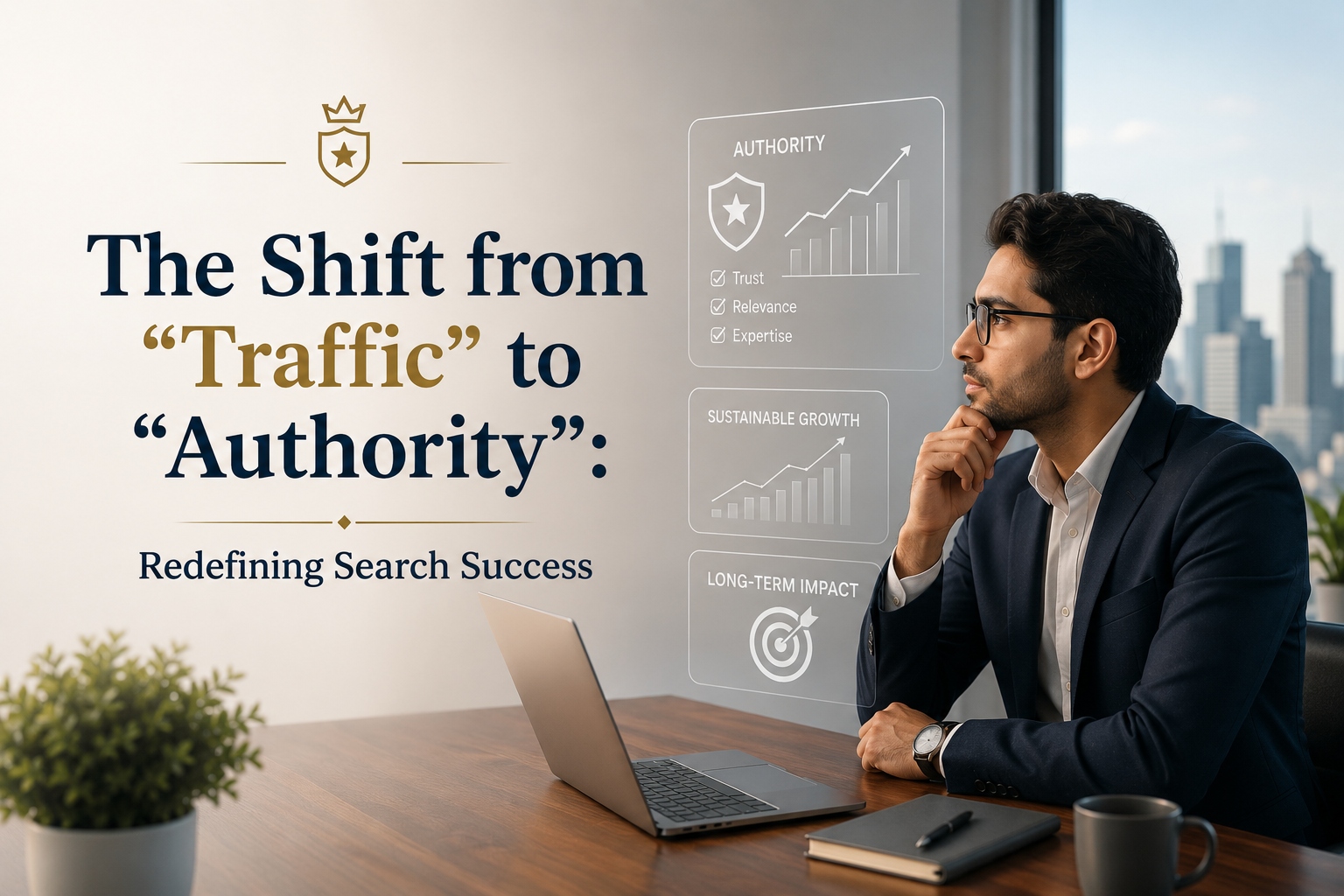
The Shift from “Traffic” to “Authority”: Redefining Search Success

For years, businesses measured SEO success through a simple metric: website traffic. The logic was straightforward—the more visitors a website received, the greater its chances of generating leads and sales. However, the search landscape is undergoing a dramatic transformation. With AI-powered search experiences providing direct answers at the top of search results, traditional click-through rates are declining across many industries. As a result, businesses are beginning to realise that visibility alone is no longer enough. Today, working with an experienced SEO Company in Kerala like TGI Technologies is less about chasing traffic numbers and more about building genuine brand authority that search engines, AI systems, and customers trust.

The End of the Traffic-Only Era

For decades, SEO strategies focused heavily on increasing website visits. Businesses celebrated higher rankings because they often translated into more clicks. Success was measured by impressions, page views, and visitor counts.

While traffic remains important, it is no longer the ultimate indicator of digital success. AI-driven search platforms are changing user behaviour by delivering concise answers directly within search interfaces. Users can often find what they need without clicking through multiple websites.

This shift has created a new challenge for businesses. Even when content ranks well, fewer people may visit the website. As a result, marketers are beginning to ask a critical question: If traffic is decreasing, how should success be measured?

The answer lies in authority.

Understanding the Rise of AI Search

Search engines are becoming increasingly intelligent. Rather than simply displaying a list of links, they analyse information from multiple sources and generate direct responses.

AI-powered search tools evaluate content quality, expertise, trustworthiness, and relevance before presenting answers to users. They are designed to identify authoritative sources and prioritise information from brands they consider reliable.

This means businesses can no longer rely solely on keyword optimisation and ranking positions. To remain visible in AI-driven environments, they must become recognised authorities within their industries.

The brands that consistently provide valuable insights, earn industry recognition, and build trust are the ones most likely to be referenced by AI systems.

Why Authority Has Become the New Currency of SEO

Authority is the digital equivalent of reputation. It reflects how much trust search engines, AI systems, industry professionals, and consumers place in a brand.

In the past, a website could sometimes rank well through technical optimization alone. Today, search platforms increasingly evaluate whether a brand deserves visibility based on its expertise and credibility.

Authority is built through multiple signals, including:

  1. High-quality content
  2. Expert insights
  3. Industry recognition
  4. Digital PR mentions
  5. Positive brand sentiment
  6. Trusted backlinks
  7. Thought leadership
  8. Community engagement

When these signals consistently point to a brand as a reliable source of information, search engines and AI systems are more likely to highlight that brand in search results.

Recognising this shift early, TGI Technologies has focused on helping businesses move beyond traditional ranking metrics and establish themselves as trusted voices within their industries. By combining strategic SEO, content development, and digital PR, the company helps brands build authority that lasts beyond algorithm changes.

The Growing Importance of Brand Mentions

One of the most significant developments in modern SEO is the increasing value of brand mentions.

A brand does not always need a direct backlink to gain authority. Mentions across respected websites, news publications, blogs, podcasts, and online communities contribute to its digital reputation.

When AI systems repeatedly encounter a brand being discussed in positive and relevant contexts, they begin associating that brand with expertise in its field.

This is why digital PR has become an essential component of modern SEO strategies. Being featured in industry publications or referenced by respected sources sends strong trust signals to both search engines and AI models.

Digital PR: The New Link Building

Traditional SEO often focused on acquiring backlinks. While backlinks remain important, the emphasis is shifting toward broader digital visibility. This is an area where TGI Technologies places significant emphasis. Rather than focusing solely on backlinks, the company helps businesses earn visibility through credible publications, industry platforms, and authoritative online channels that strengthen long-term trust and recognition.

Digital PR helps businesses gain exposure through:

  1. Industry news websites
  2. Expert interviews
  3. Business publications
  4. Podcast appearances
  5. Online magazines
  6. Thought leadership articles

These placements do more than improve rankings. They position businesses as credible voices within their industries.

When AI systems scan the web and repeatedly find a brand being cited by authoritative sources, that brand’s perceived authority increases significantly.

Why YouTube Is Becoming an Authority Platform

Many businesses still view YouTube primarily as a marketing channel. In reality, it has become one of the strongest authority-building platforms available.

Video content allows brands to demonstrate expertise in a highly engaging format. Educational videos, industry analysis, tutorials, and thought leadership content help establish credibility.

AI systems increasingly draw insights from multimedia content. A strong YouTube presence expands a brand’s digital footprint and reinforces its expertise across multiple channels.

Companies that consistently publish valuable video content are building authority not just with audiences but also with the algorithms that shape modern search experiences.

Trusted Forums and Community Engagement Matter More Than Ever

Online communities are becoming powerful trust indicators.

Platforms where professionals exchange ideas and solve problems provide valuable opportunities for brands to demonstrate expertise naturally.

Meaningful participation in industry discussions allows businesses to:

  1. Answer real-world questions
  2. Showcase practical knowledge
  3. Build trust with audiences
  4. Establish thought leadership

AI systems often evaluate community discussions when determining which brands are considered credible within specific industries.

Brands that contribute genuine value to conversations are more likely to be recognised as authorities than those that focus exclusively on promotional content.

Expertise, Experience, Authority, and Trust

Modern search algorithms increasingly focus on signals related to expertise and trustworthiness.

Businesses that consistently demonstrate:

  1. Real-world experience
  2. Industry expertise
  3. Transparent communication
  4. Reliable information
  5. Helpful content

are more likely to gain visibility in AI-driven search environments.

This means content strategies must evolve beyond targeting keywords. Every piece of content should contribute to building trust and reinforcing expertise.

The goal is no longer simply ranking for a keyword. The goal is becoming the source that search engines and AI systems trust most.

Measuring Success Beyond Traffic

As authority becomes the primary focus, businesses need new performance indicators.

Instead of looking only at traffic numbers, successful brands now monitor:

Brand Mentions

How often is the company referenced across trusted platforms?

Share of Voice

How visible is the brand compared to competitors?

Branded Searches

Are more people searching specifically for the company name?

Media Coverage

Is the business being featured in industry publications?

Industry Recognition

Are experts and professionals citing the brand?

Customer Trust

Are users engaging positively with content and recommendations?

These metrics provide a more accurate picture of long-term digital influence.

The Competitive Advantage of Authority

Traffic can fluctuate with every algorithm update. Authority, however, creates resilience.

Brands with strong authority are less vulnerable to changes in search behaviour because they are recognised across multiple channels. They receive visibility through:

  1. Search engines
  2. AI-generated answers
  3. Industry publications
  4. Social media
  5. Video platforms
  6. Professional communities

This diversified presence creates sustainable growth that extends far beyond traditional SEO rankings.

The Future of Search Belongs to Trusted Brands

The evolution of AI search is pushing businesses toward a new reality. Search success is no longer defined solely by clicks and rankings. Instead, it is increasingly determined by whether a brand is viewed as trustworthy, knowledgeable, and authoritative.

The businesses that invest in thought leadership, digital PR, educational content, community engagement, and brand building today will be the ones that dominate tomorrow’s search landscape.

As AI continues to reshape how information is discovered, authority will become one of the most valuable digital assets a company can possess.


Conclusion

The conversation around SEO is changing rapidly. While traffic remains valuable, it is no longer the only measure of success. In an era where AI-generated answers are reducing traditional click-through rates, businesses must focus on becoming trusted sources of information rather than simply attracting visitors. Building authority through digital PR, expert content, YouTube, industry mentions, and community engagement is now essential for long-term visibility. This is why businesses increasingly turn to TGI Technologies, a trusted SEO Company in Kerala, to help them adapt to the future of search and establish a lasting position as recognised industry leaders.

04Jun

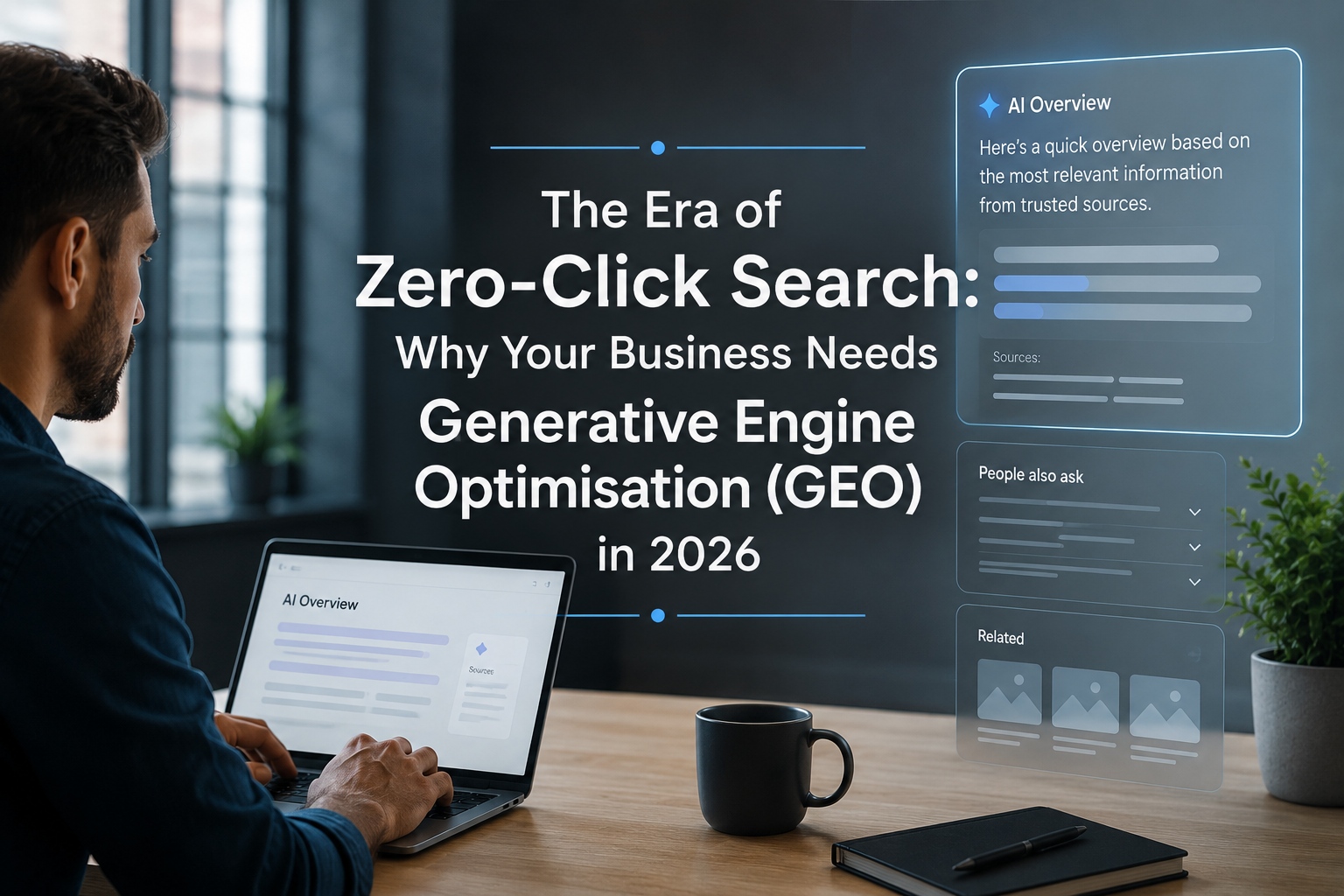
The Era of Zero-Click Search: Why Your Business Needs Generative Engine Optimisation (GEO) in 2026

Search behaviour has fundamentally shifted. Recent industry data from 2026 reveals that more than 60% of all online searches now end without a single click to an external website. Users are no longer scrolling through pages of blue links; instead, they are typing complex questions and receiving instant, synthesised answers directly from AI models like Google AI Overviews, ChatGPT Search, and Perplexity.

For businesses relying solely on traditional search traffic, this “zero-click” era poses a severe threat. However, for those who adapt, it presents a massive opportunity to capture high-intent audiences. The key is shifting your focus from simply driving clicks to becoming the authoritative source that AI models trust and cite.

The Death of the “Blue Link”

The traditional model of search engine optimisation was straightforward: target a keyword, build backlinks, rank on page one, and capture website traffic. Today, AI engines read, summarise, and present information from thousands of sources in seconds. If a user asks, “What is the best CRM for a small business?”, the AI provides a bulleted list of recommendations directly on the results page.

If your brand is not the one providing the underlying data for that AI-generated summary, you are entirely invisible to the consumer. Success is no longer measured purely by web traffic, but by how frequently your brand is referenced, cited, and recommended inside generative AI answers.

What is Generative Engine Optimisation (GEO)?

Generative Engine Optimisation (GEO) is the modern discipline of structuring your digital content so that Large Language Models (LLMs) can easily digest, verify, and recommend it. While traditional SEO focuses on keyword density and link profiles, GEO focuses on semantic relevance, entity authority, and conversational formatting.

As a pioneering GEO service company in Kochi Kerala, TGI Technologies helps brands transition their digital assets to ensure they remain highly visible in this AI-first ecosystem. We understand that AI platforms favour clear, expert-authored, and evidence-backed content. Our strategies are built to ensure your business is accurately summarised and consistently cited when potential customers consult answer engines.

Strategy Focus Traditional SEO Generative Engine Optimisation (GEO)
Primary Goal Ranking high in standard search results Being cited directly by AI models
Key Metric Website traffic and click-through rates Brand visibility and AI citations
Content Style Keyword-led and length-focused Conversational, direct, and factual
Technical Priority Backlinks and page loading speed Schema markup and entity authority

How to Adapt Your Strategy for Answer Engines

Adapting to zero-click search does not mean abandoning technical SEO; rather, it requires adding a layer of Answer Engine Optimisation to your existing framework. Here is how modern businesses must pivot their strategies:

  • Implement the “Answer First, Explain Second” Format: AI crawlers look for direct, extractable answers. Place a concise, 40-to-60-word answer at the very top of your page or section, immediately below the heading. Once the direct answer is provided, you can use the rest of the page to dive into the detailed explanation.

  • Target Conversational Intent: Users are speaking to AI models naturally, asking full questions rather than fragmented keywords. Optimise your content for long-tail, question-based queries. Building comprehensive FAQ sections that use the exact phrasing your customers use is one of the most effective ways to capture AI visibility.

  • Deploy Robust Schema Markup: AI models rely heavily on structured data to understand context. Implementing specific schema types—such as FAQ, HowTo, Organization, and Product—acts as a direct translation layer, making it significantly easier for AI systems to categorise and display your business information in rich results.

Future-Proofing Your Digital Presence

Search is not disappearing; it is simply dissolving into conversational AI. Brands that proactively manage their AI visibility today will consistently shape how buyers understand their market tomorrow. By integrating GEO into your wider digital marketing efforts, you insulate your business against algorithmic volatility and maintain a direct line to your consumers.

If you are seeing a drop in traditional search traffic or want to ensure your brand dominates AI-generated recommendations, it is time to audit your digital footprint. Visit TGI Technologies to explore our comprehensive optimisation frameworks, or contact our expert team today to build a strategy that thrives in the zero-click era.

14May

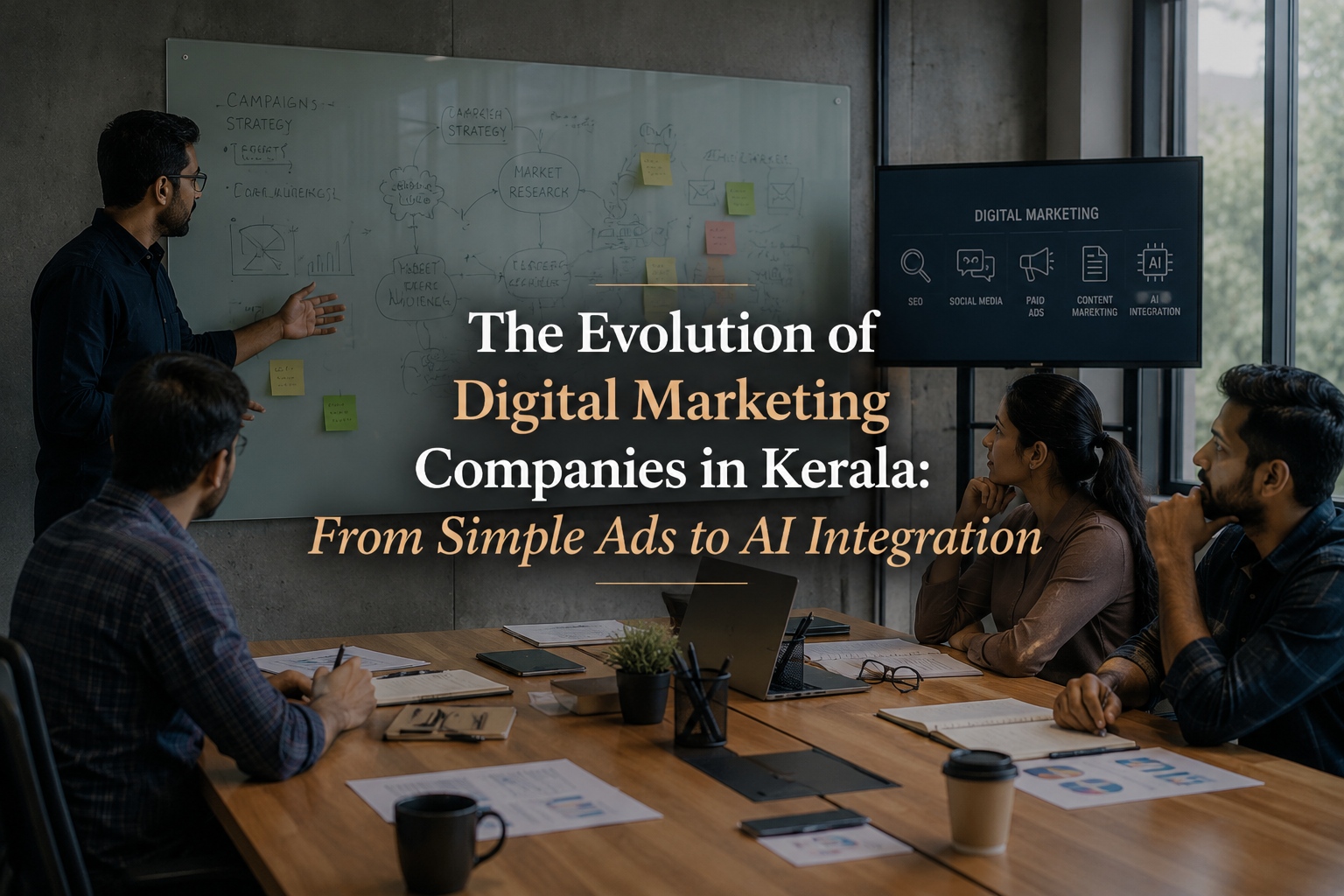
The Evolution of Digital Marketing Companies in Kerala: From Simple Ads to AI Integration

The digital landscape has undergone a remarkable transformation over the past decade, reshaping how businesses connect with their audiences. What once began with basic banner advertisements and simple promotional campaigns has now evolved into a sophisticated ecosystem powered by automation, analytics, and artificial intelligence. Today, Digital Marketing Companies in Kerala are no longer limited to creating social media posts or running advertisements; instead, they are becoming strategic growth partners that help brands navigate an increasingly intelligent digital world. Furthermore, from local businesses to global enterprises, companies in Kerala are embracing advanced technologies to stay competitive and relevant in a rapidly changing market.

The Early Days of Digital Marketing in Kerala

The initial phase of digital marketing in Kerala was relatively straightforward. Consequently, businesses primarily focused on creating a basic online presence through websites, email campaigns, and simple online advertisements. Social media platforms were still emerging, and marketing strategies relied heavily on visibility rather than engagement.

At that time, digital marketing was often viewed as an extension of traditional advertising. Specifically, businesses used online platforms mainly to promote products and services without deeply analysing customer behaviour or measuring campaign performance. Therefore, the focus was largely on exposure rather than meaningful interaction.

The Rise of Social Media and Content Marketing

As platforms like Facebook, Instagram, and YouTube gained popularity, the role of digital marketing began to expand. Businesses realised that customers were spending more time online, consuming content, sharing opinions, and interacting with brands directly.

Digital marketing companies in Kerala adapted quickly to this shift by focusing on social media management, content creation, and audience engagement. Instead of simply displaying advertisements, agencies started building brand personalities through storytelling, visuals, and interactive campaigns. Moreover, this period marked a significant transition from one-way communication to two-way engagement. Brands were no longer speaking to audiences; rather, they were speaking with them.

Data-Driven Marketing Becomes the New Standard

As digital platforms evolved, businesses gained access to valuable customer data. As a result, marketing strategies became more analytical and performance-oriented. Agencies started tracking metrics such as website traffic, click-through rates, conversion rates, and customer demographics.

This shift introduced a more scientific approach to marketing. Because of this, campaigns were no longer based on assumptions alone; decisions were guided by measurable insights. Digital marketing firms in Kerala began investing in tools and technologies that allowed them to understand audience behaviour more accurately. Ultimately, the result was more targeted campaigns, improved return on investment, and better customer experiences.

Search Engine Optimisation Changes the Game

The growing importance of search engines transformed digital marketing strategies significantly. Businesses realised that visibility on search engines directly impacted their growth and credibility.

Consequently, SEO became a core service offered by marketing agencies. Companies started focusing on keyword research, website optimisation, quality content creation, and technical improvements to improve search rankings. This phase also encouraged businesses to think long-term. Instead of relying only on paid advertisements, they invested in building sustainable organic visibility that could generate consistent traffic over time.

The Mobile Revolution and Consumer Behaviour Shift

The widespread use of smartphones completely changed how consumers interacted with brands. People began searching, shopping, and engaging with businesses directly from their mobile devices.

In response, digital marketing companies in Kerala prioritised mobile-friendly strategies. Websites became responsive, advertisements were optimised for smaller screens, and content was tailored for mobile consumption. This transformation highlighted the importance of user experience. Similarly, speed, accessibility, and convenience became critical factors in successful digital campaigns.

Automation and Personalisation in Marketing

As competition increased, businesses needed more efficient ways to manage customer interactions. This led to the adoption of automation tools in email marketing, customer relationship management, and social media scheduling.

Automation allowed agencies to streamline repetitive tasks while maintaining consistent communication with audiences. At the same time, personalisation became increasingly important. Since customers expected brands to understand their preferences, delivering relevant experiences became vital. Therefore, marketing strategies evolved to include personalised recommendations, targeted advertisements, and customised communication based on user behaviour.

The Emergence of AI in Digital Marketing

Artificial intelligence has become one of the most transformative forces in the marketing industry. AI-powered tools are now helping agencies analyse data, predict trends, automate customer interactions, and optimise campaigns in real time.

Currently, digital marketing companies in Kerala are increasingly integrating AI into their workflows to enhance efficiency and improve results. Chatbots, predictive analytics, AI-generated insights, and automated content optimisation are becoming common features of modern marketing strategies. Additionally, AI enables businesses to process massive amounts of data quickly, allowing for smarter decision-making and more precise targeting.

AI-Driven Content and Customer Engagement

Content creation itself is evolving with the help of AI. Agencies are using AI tools to analyse audience interests, identify trending topics, and optimise content for search engines.

However, the role of human creativity remains essential. While AI can assist with data and efficiency, emotional storytelling, cultural understanding, and brand voice still require human expertise. For this reason, the most successful digital marketing companies combine AI capabilities with creative strategy, ensuring that campaigns remain both intelligent and authentic.

Predictive Analytics and Smarter Decision-Making

One of the biggest advantages of AI integration is predictive analytics. Instead of reacting to trends after they occur, businesses can now anticipate customer behaviour and market changes.

AI tools analyse historical data and user patterns to forecast future actions. Thus, this allows marketers to refine campaigns proactively, allocate budgets more effectively, and improve overall performance. For businesses in Kerala, this means gaining a competitive edge in increasingly crowded digital markets.

Voice Search and Conversational Marketing

The rise of voice assistants and conversational AI has introduced a new dimension to digital marketing. Consumers are now using natural language queries instead of traditional keyword searches.

This shift has encouraged agencies to adapt content strategies for conversational search patterns. Furthermore, businesses are also using chatbots and AI-driven customer support systems to provide instant responses and personalised assistance. Consequently, the focus is gradually moving from simple visibility to creating seamless and interactive digital experiences.

Addressing Challenges in the AI Era

While AI offers numerous advantages, it also presents challenges. For instance, over-reliance on automation can lead to generic content and reduced authenticity. Privacy concerns and ethical use of data are also becoming increasingly important as businesses collect more customer information.

Therefore, digital marketing companies must strike a balance between technology and human connection. The goal is not to replace creativity with automation but rather to use AI as a tool that enhances strategic thinking and customer engagement.

The Future of Digital Marketing in Kerala

The future of digital marketing in Kerala is likely to be shaped by deeper AI integration, advanced analytics, immersive experiences, and hyper-personalisation. Businesses will increasingly rely on intelligent systems to understand customers and optimise campaigns in real time.

At the same time, creativity, storytelling, and cultural relevance will remain essential. Although technology may evolve rapidly, the core objective of marketing—building meaningful relationships with audiences—will continue to drive success.

Conclusion

The journey of digital marketing from simple online advertisements to AI-powered strategies reflects how rapidly the industry has evolved. Today, marketing is no longer just about visibility; it is about understanding behaviour, predicting trends, and delivering personalised experiences. Digital Marketing Companies in Kerala have adapted to these changes by combining creativity with advanced technology, helping businesses grow in an increasingly competitive digital environment. As AI continues to reshape the future of marketing, we believe that companies that embrace innovation while maintaining authentic human connection will lead the next phase of digital transformation.